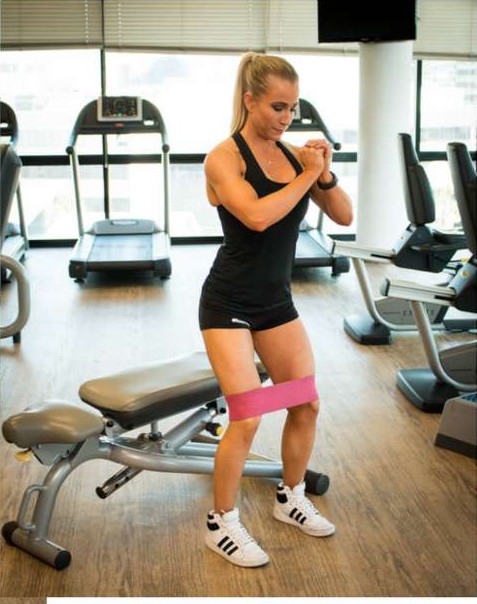
Many people with sore knees notice the same thing: going up stairs is fine, but coming down hurts. That’s not your imagination. Going down stairs asks a lot more of the muscles around the knee than going up, and it’s often the first place a knee that lacks strength or control complains.
In this post you’ll learn why stairs are harder on the knee on the way down, and four exercises from my 3-stage knee rehabilitation guide that help train the control your knee needs.
Why Going Down Stairs Is Harder on Your Knees
When you step down, your front thigh muscles (the quads) have to lengthen while they work, lowering your body weight in a controlled way as the knee bends. This is called eccentric control. If the quads are weak, slow to switch on, or tired, the knee loses some of that control, and more load goes through the front of the knee and the area around the kneecap.
Your glutes play a role too. If they don’t hold the pelvis and thigh steady, the knee tends to drift inwards as you step down, which adds strain. That’s why stair pain usually responds well to work on both the quads and the hips.
When to Get It Checked
Stair pain is common, but see a health professional if your knee is swollen, locks or catches, gives way, or if the pain started after a fall or a twist. These can point to problems that need a proper diagnosis before you start exercising.
4 Exercises That Help With Stair Pain
1. Sit to Stand
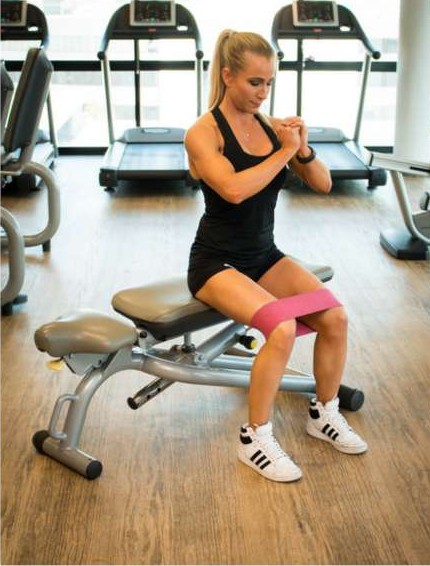
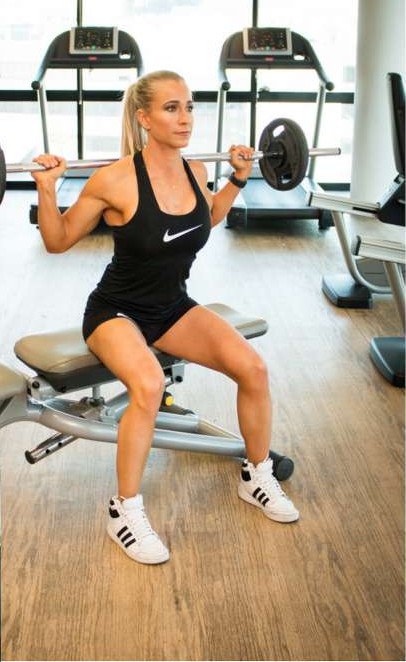
Sit on a sturdy bench or chair with a band around your knees. Stand up by pushing through your heels, then lower yourself back down slowly with control. The slow lowering trains the same eccentric control you need on the stairs. Use a higher seat to make it easier.
2. Step Down
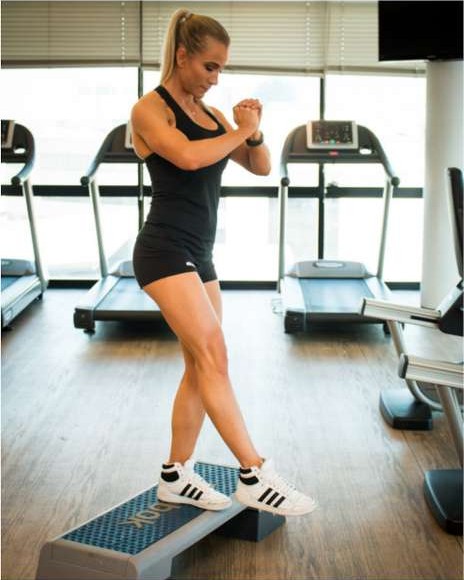
Stand on a low step on one leg with the other leg hanging off the front. Slowly bend the standing knee to lower the free heel towards the floor, keeping the standing knee in line with your toes, then push back up. Start with a very low step and only go as far as you can control without pain.
3. Step Down With a Band
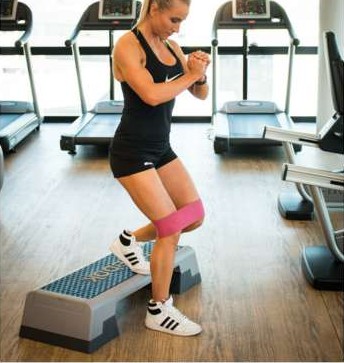
Once the basic step down feels easy, add a mini band just above your knees and keep gentle outward pressure on it as you lower. It trains your hips to keep the knee tracking well, which is exactly what you need on the stairs.
4. Lateral Step
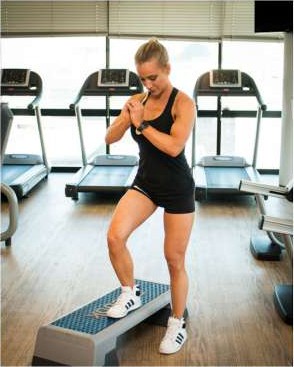
Stand side-on to a low step with one foot on it. Step sideways up and then slowly back down, keeping the supporting knee bent and in line with your toes. It builds stability for stepping on and off kerbs and stairs at an angle.
Tips for Stairs While You Rebuild
- Use the handrail; there’s no prize for going hands-free
- Lead with the stronger leg going up and the sorer leg going down (“up with the good, down with the bad”)
- Take the stairs one step at a time if you need to, and put your whole foot on each step
- Wear supportive shoes rather than slippers
Building Lasting Strength
Control on the stairs comes from strong, switched-on muscles. Start with quad activation exercises, progress to knee strengthening exercises at home, and add gluteus medius exercises to stop the knee caving inwards. The full guide includes the step-down progressions, reps and difficulty levels.
Want the complete programme? The Knee Rehabilitation guide includes every stretching, activation and strengthening exercise with photos, difficulty ratings from beginner to advanced, and three ready-made workouts.
Disclaimer
Please make sure you get a correct diagnosis from a health professional before starting any of these exercises if you are currently carrying an injury, and stay under their advice throughout your rehab.