Your glutes are some of the biggest and most important muscles in your body. They extend your hip, keep your pelvis level and help control your knees every time you walk, climb stairs or get up from a chair. Hours of sitting, old injuries or training that never really targets them can leave them weak or “switched off”, and the rest of the body pays for it.
In this post you’ll learn the common signs of weak glutes, a simple test you can do at home, and four exercises from my 3-stage glute and hip rehabilitation guide to start building them up.
Common Signs of Weak Glutes
- A stiff or achy lower back, especially after standing or walking for a while
- Hamstrings that cramp or tighten when you do bridges or hip thrusts
- Knees that cave inwards when you squat, lunge or go down stairs
- Your pelvis dropping to one side when you stand on one leg
- Tight hip flexors from long hours of sitting
- Feeling exercises such as squats mostly in your thighs or lower back rather than your glutes
These signs don’t prove your glutes are weak, and pain always deserves a proper diagnosis, but if several sound familiar, glute strength is worth looking at.
A Simple Weak Glutes Test
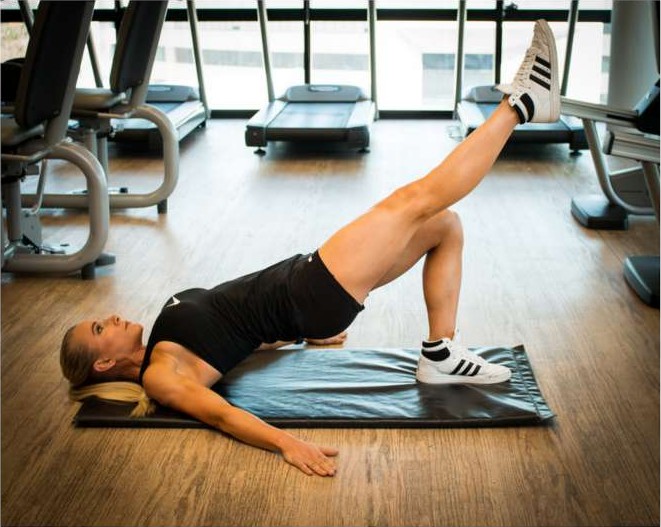
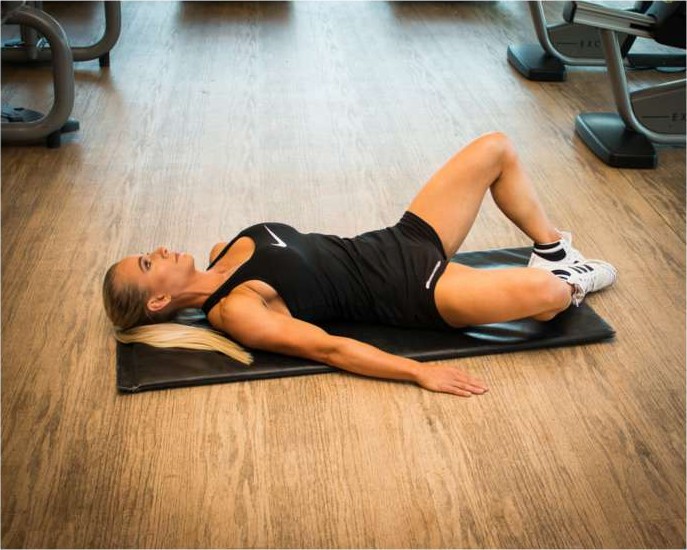
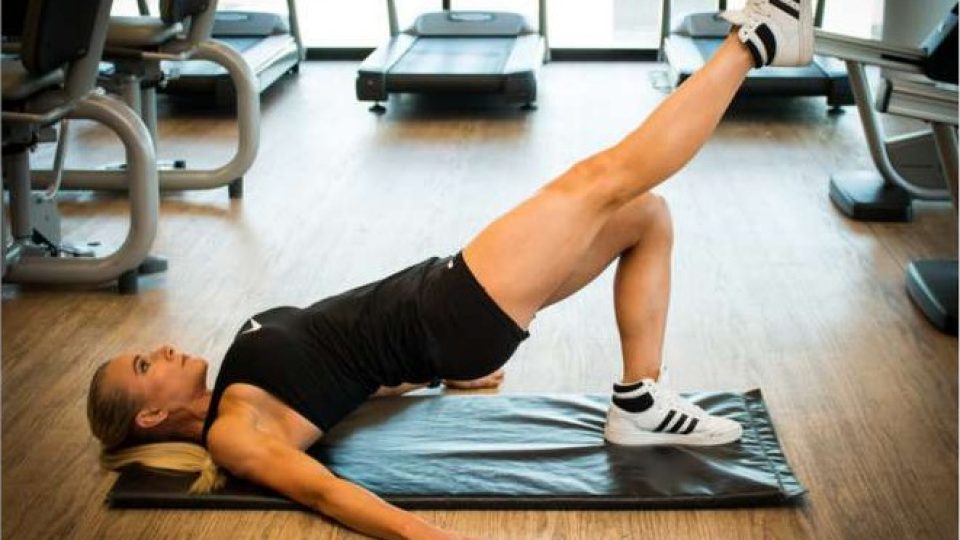
Lie on your back with knees bent and lift into a bridge. Now straighten one leg in line with the other knee and try to hold the position steadily. Watch for three things: does the hip on the lifted-leg side drop, do your hamstrings cramp, or do you feel it mostly in your lower back? Any of these, especially if one side is clearly worse than the other, suggests your glutes aren’t doing their share yet.
4 Exercises to Start Strengthening Weak Glutes
1. Glute Bridge
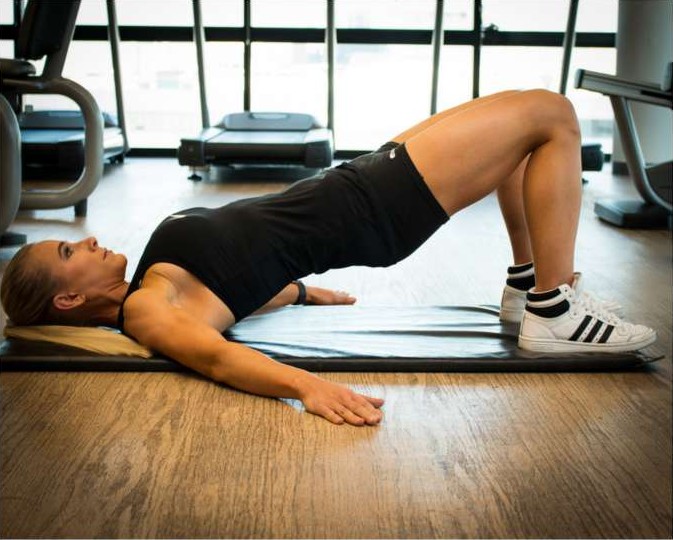
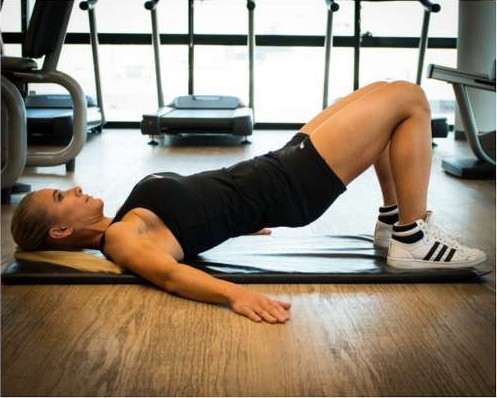
Lie on your back in a neutral spine with knees bent. Breathe out, draw your belly button in and lift your hips until your knees, hips and shoulders are in one line. Keep your weight in your heels and your core engaged, hold, and lower slowly. If you feel it in your lower back, lower the height a little.
2. Single Leg Bridge
The same as the test above, used as an exercise. Hold the bridge on one leg without letting the hips drop or twist. It’s a big step up from the two-leg bridge, so master that first.
3. “Glute” Plank With a Band
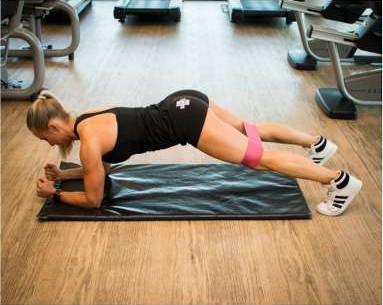
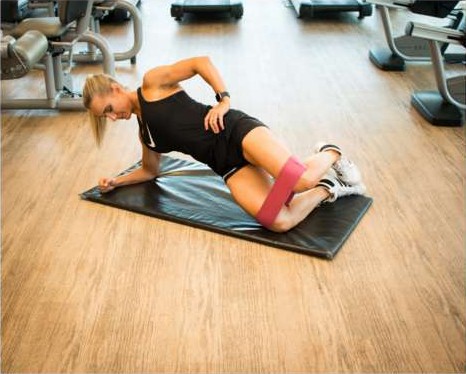
Get into a forearm plank with a band just above your knees and your feet slightly wider than hip-width so there’s tension on the band. Keep your spine neutral and gently press your knees out against the band as you hold. You’ll feel the sides of your glutes switch on.
4. Step Up (Glute Focus)
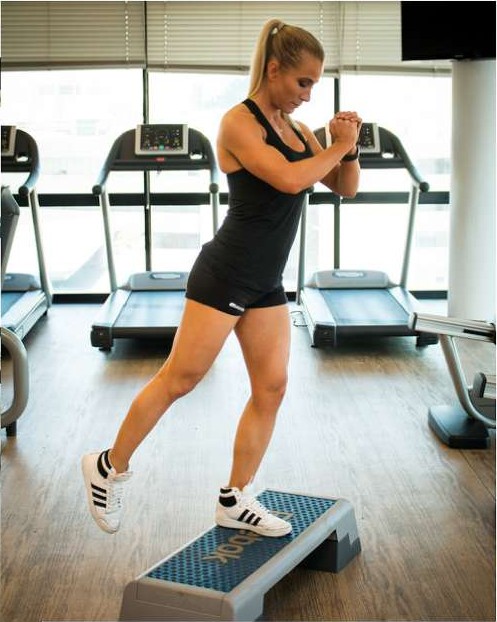
Place one foot on a low step and lean slightly forward onto it. Step up by pushing through the heel of that leg only, keeping the knee soft and in line with your toes, then lower back down slowly. Leaning forward and driving through the heel shifts the work from your thigh to your glute.
Weak Glutes, Back Pain and Knee Pain
When the glutes don’t stabilise the pelvis, the lower back often takes over, which is why glute strength is a big part of the back rehabilitation guide too. The glutes also control the thigh bone, so weak glutes often show up as knee pain when the knee drifts inwards.
If your glutes struggle to switch on at all, start with glute activation exercises before strengthening, and add gluteus medius band exercises for the side of the hip.
Knee pain too? Weak glutes often show up as knee pain. See the 3-stage knee rehabilitation guide, including knee strengthening exercises at home.
Ready for the full programme? The Glute, Hip & SI Joint Rehab guide covers stretching, activation and strengthening, with every exercise photographed, rated beginner to advanced and built into three workout plans.
Disclaimer
Please make sure you get a correct diagnosis from a health professional before starting any of these exercises if you are currently carrying an injury, and stay under their advice throughout your rehab.