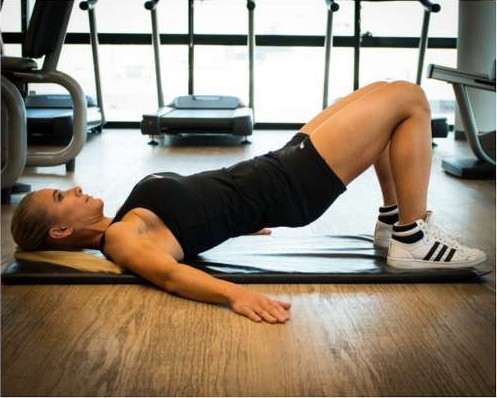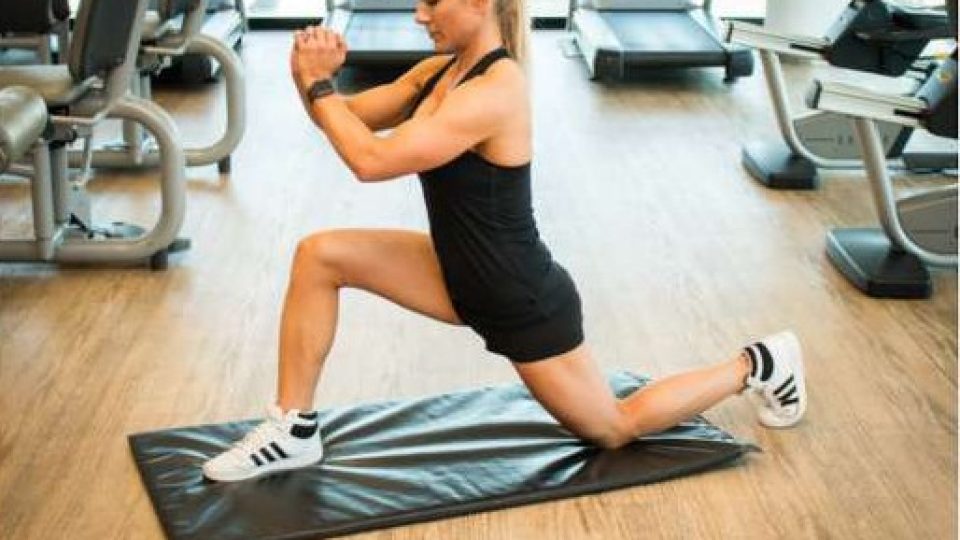
Tight hips are one of the most common complaints I hear, from desk workers who sit all day to runners and gym-goers. When the hip flexors at the front of the hip and the glutes at the back get tight, they change how your pelvis sits. That can show up as hip pain, a stiff lower back, or even knee niggles.
Below are five of the stretches I use most with clients who have tight, sore hips. They come from Stage 1 (stretching and mobility) of my 3-stage glute and hip rehabilitation guide, and they’re a safe starting point for most people.
3 Rules Before You Stretch Your Hips
- No pain, only a stretch. You should feel a gentle pull in the muscle, never sharp or pinching pain in the joint. If it pinches at the front of the hip, ease off.
- Keep your pelvis steady. Most hip stretches go wrong when the lower back arches to “cheat” more range. Gently tighten your core to keep the stretch where it belongs.
- Breathe into it. Hold each stretch and use a few slow breaths to relax deeper into it rather than forcing it.
5 Stretches for Tight Hips and Glutes
1. Glute Stretch (Figure Four)
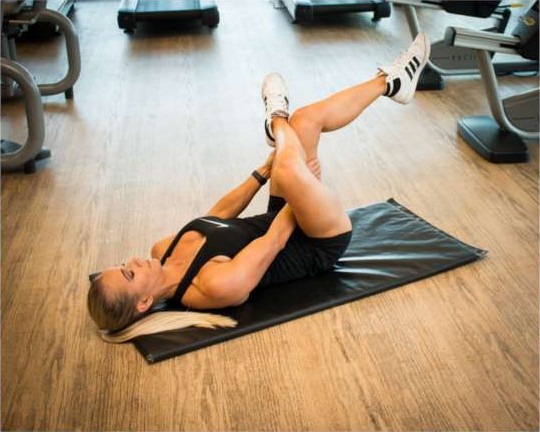
Lie on your back with both knees bent and place one ankle over the opposite knee. Reach through your legs, hold behind the bottom thigh, and gently pull both legs towards you until you feel the stretch in the glute of the crossed leg. Keep your head and shoulders relaxed on the mat.
2. Hurdle Stretch (Hip Flexors)
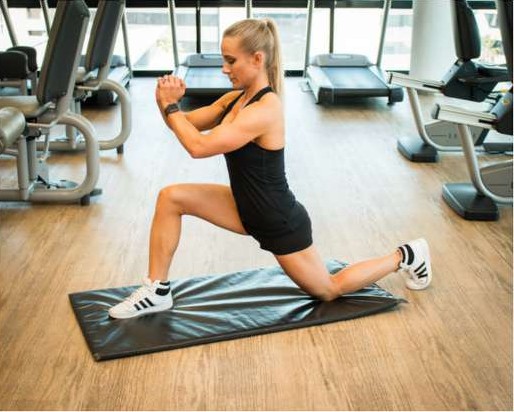
Kneel on a mat, step one leg forward and lean your weight onto it with your hands held up in front of you. You should feel the stretch run down the front of the hip and quad of the back leg. Tuck your tailbone slightly under so your lower back doesn’t arch.
3. Bench Hip Flexor Stretch
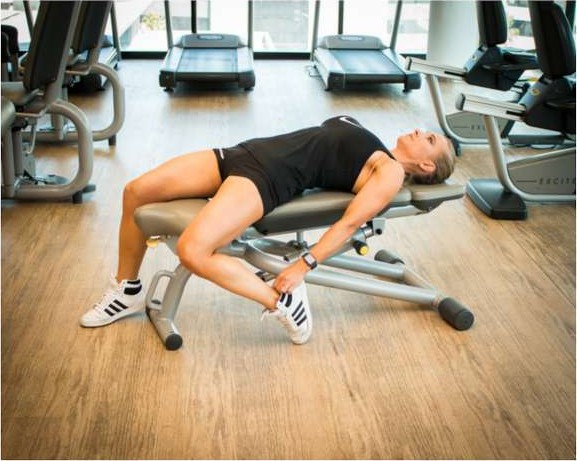
Lie on your back along a bench with your legs on either side. Take one leg backwards, hold the heel and gently pull the leg into a bent position while your body and neck stay relaxed on the bench. This is a stronger stretch, so only move to it once the kneeling version feels easy.
4. Hamstring Stretch With a Band
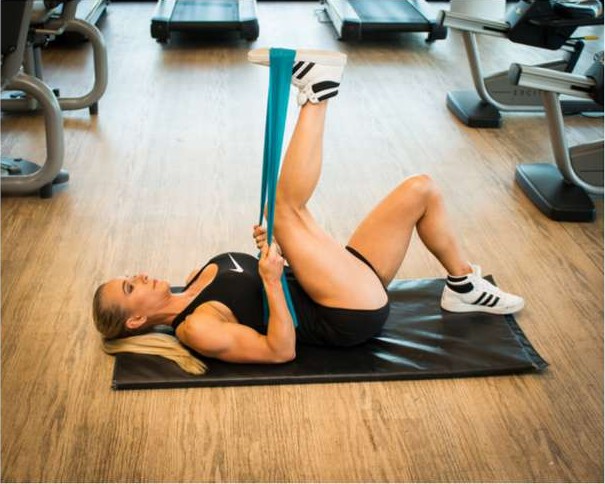
Lie on your back with a band around one foot. Keeping the knee as straight as is comfortable, gently draw the leg up towards you until you feel a stretch down the back of the thigh. Keep the other leg relaxed and your lower back on the mat.
5. Cross Over Stretch
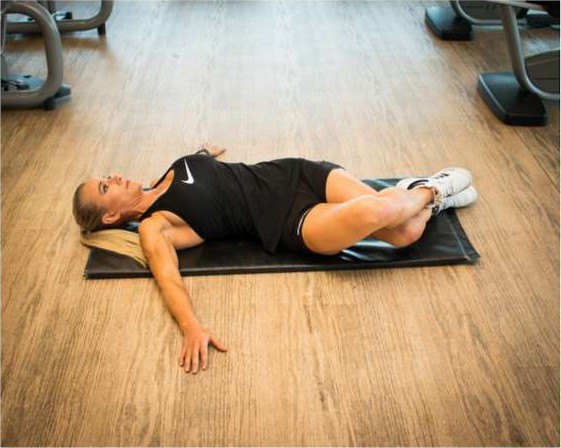
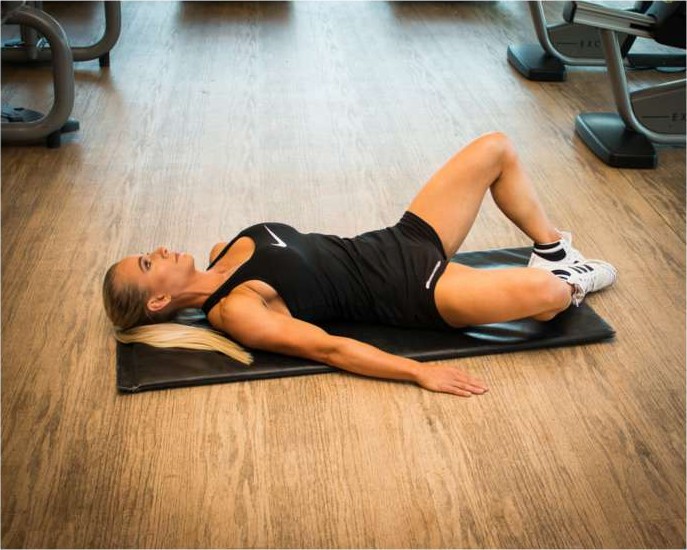
Lie on your back with one knee bent and the other leg straight. Take the bent knee across your body with the opposite hand, keeping your shoulders on the mat. You should feel it through the outside of your hip and into your lower back.
How Often Should You Stretch Your Hips?
A short stretching session most days usually works better than one long session a week. Use these as a warm-up before exercise or on their own on days your hips feel tight. How long to hold each stretch, how many rounds to do, and when to move on to the harder progressions depends on where you are in your recovery. That’s what the difficulty levels and workout plans in the full guide are for.
Tight glutes and hip flexors are closely linked with lower back pain too. If your back is also stiff, see these 6 gentle lower back stretches and how to use foam rolling for the glutes and quads.
Stretching Is Only Stage 1
Stretching helps your hips feel looser, but tight hips are often a sign of glutes that aren’t doing their job. The next step is to wake up your glutes with activation exercises, then build strength, for example with gluteus medius exercises at home.
Want the complete programme? The Glute, Hip & SI Joint Rehab guide includes every stretch and progression, activation and strengthening exercises rated beginner to advanced, photos of each exercise and three ready-made workouts.
Disclaimer
Please make sure you get a correct diagnosis from a health professional before starting any of these exercises if you are currently carrying an injury, and stay under their advice throughout your rehab.